
 4/79 Catalano Rd Canning Vale WA 6155


 Referral Form
 Call Us Now
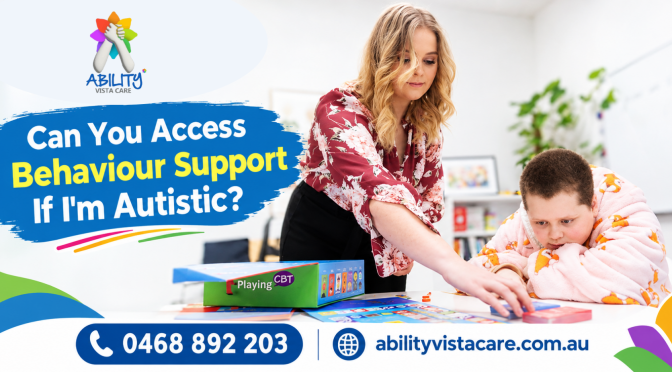
Yes — autistic NDIS participants can absolutely access behaviour support. If autism affects your daily functioning, communication, or emotional regulation, you’re likely eligible for NDIS support services in Highgate funded under Capacity Building or Capital supports.
Is Autism Automatically Covered Under the NDIS?
Autism Spectrum Disorder (Level 2 or 3) is a List A condition, meaning diagnosis alone often satisfies NDIS access requirements without extra evidence.
- Autism Level 2 or 3 diagnoses generally qualify automatically
- Level 1 (mild) diagnoses may need additional functional evidence
- A paediatrician, psychiatrist, or psychologist report is required either way
What Exactly Is Behaviour Support?
Behaviour support is a structured, evidence-based approach that helps individuals understand and reduce behaviours of concern while building safer, more effective coping strategies.
Behaviour support Highgate services typically include:
- A comprehensive functional behaviour assessment (FBA)
- Development of a Positive Behaviour Support (PBS) Plan
- Strategies to reduce restrictive practices
- Training for family members, carers, and support workers
- Ongoing plan reviews and adjustments
Why Might an Autistic Person Need Behaviour Support?
Not every autistic person needs behaviour support — it depends on individual needs, not diagnosis alone.
Common reasons include:
- Meltdowns or shutdowns impacting daily life
- Difficulty with transitions or routine changes
- Sensory overwhelm leading to distress
- Self-injurious or aggressive behaviours
- Communication barriers causing frustration
If these patterns affect safety, relationships, or participation at home, school, or in the community, a referral to a registered behaviour support practitioner is a sensible next step.
How Do You Access NDIS Behaviour Support?
Getting started is simpler than most families expect.
| Step | Action |
| 1 | Confirm behaviour support funding is in your NDIS plan (Capacity Building – Improved Relationships) |
| 2 | Request a referral from your GP, paediatrician, or Support Coordinator |
| 3 | Choose a registered NDIS behaviour support practitioner |
| 4 | Complete an initial assessment (FBA) |
| 5 | Begin implementing your Positive Behaviour Support Plan |
If behaviour support isn’t yet listed in your plan, your Local Area Coordinator (LAC) or planner can help you request it at your next plan review.
What Does a Positive Behaviour Support Plan Actually Include?
A PBS plan is a practical, individualised document — not a generic checklist.
It usually outlines:
- Triggers and early warning signs
- Proactive strategies to prevent escalation
- Reactive strategies for safe de-escalation
- Skill-building goals (communication, emotional regulation)
- Clear guidance for support workers and family
Why Choose Local Behaviour Support Services?
Working with local providers means faster response times, better community knowledge, and more consistent in-home support.
Disability support services in Highgate providers understand local schools, GPs, allied health networks, and community resources — meaning smoother coordination and fewer delays between assessment and implementation.
What Role Does a Support Coordinator Play?
A Support Coordinator connects the dots between your NDIS plan, your behaviour support practitioner, and everyday support workers.
They help you:
- Understand your autism NDIS behaviour support funding
- Find a suitably qualified, registered practitioner
- Coordinate reports across allied health providers
- Monitor plan progress and outcomes
Ready to Access the Right Support?
Autism doesn’t have to mean navigating behaviour challenges alone. Reliable NDIS Behaviour support in Highgate services can build a personalised plan that improves daily life for you or your loved one. Reach out to Ability Vista Care to book an assessment and start your Positive Behaviour Support journey with a team that genuinely understands autism.
Frequently Asked Questions
1. Can autistic adults access NDIS behaviour support, not just children?
Yes, behaviour support is available to eligible NDIS participants of any age, including adults.
2. Do I need a formal diagnosis to access behaviour support?
Yes, a diagnostic report from a qualified professional is required to access NDIS-funded behaviour support.
3. How long does it take to get a Positive Behaviour Support Plan?
Timeframes vary, but assessments typically begin within a few weeks of referral, depending on provider availability.
4. Is behaviour support only for “severe” behaviours?
No, it also supports proactive skill-building and prevention, not just crisis behaviours.
5. Can family members be involved in the behaviour support process?
Yes, family and carer training is a core part of most Positive Behaviour Support Plans.